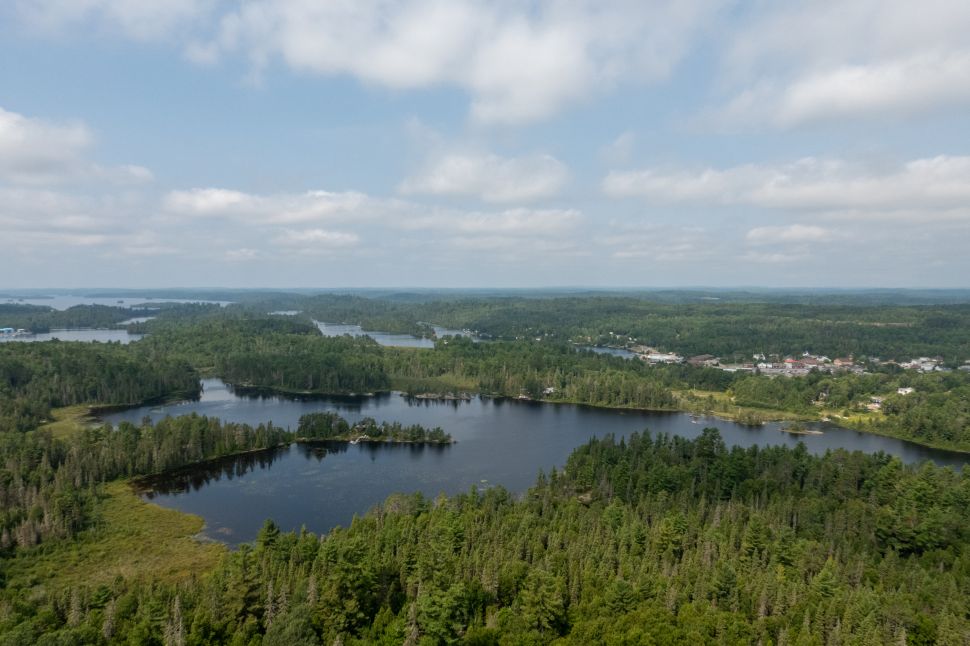
Eight rivers begin in Ontario’s Headwaters region. Three of them feed the Great Lakes. Millions of Ontarians drink
This is not a uniquely Ontario problem. Across North America and beyond, governments are racing to streamline development approvals in the name of economic competitiveness, and in most cases, the environmental review mechanisms being shed are the same ones designed to catch irreversible harm before it occurs. Permitting reform is a live policy debate in the U.S., the U.K., Australia and across the E.U., framed almost universally as a prerequisite for growth. What is rarely framed alongside it is the cost. Ontario is where that cost is becoming visible, and where the consequences, if they arrive, will not stay within provincial borders.
Ontario’s Auditor General Follow Up Report makes clear that this is not theoretical. It documented that the Ministry of Natural Resources is failing to enforce aggregate regulations, and that operators are effectively running a permitting free-for-all while the province looks the other way. Amendments to Canada’s Impact Assessment Act in 2024 narrowed how certain cross-border environmental effects are defined, reducing federal oversight of downstream, cross-watershed impacts—precisely the kind of harm Ontario’s headwaters are meant to prevent. At the same time, the province has been streamlining its own approvals: curtailing Conservation Authorities, narrowing Environmental Assessment triggers and compressing windows for public input on environmentally sensitive projects. It is framed as cutting red tape. What it’s actually doing is dismantling the only mechanism that stops aggregate companies from permanently compromising Ontario’s
This is why the Headwaters region matters. It is where the Niagara Escarpment meets the Oak Ridges Moraine, known as the rain barrel of Ontario. More than 65 rivers and streams begin here. When snow melts in spring, that
The Great Lakes hold approximately 21 percent of the world’s freshwater and supply drinking
It’s also where the permitting failures become impossible to ignore. The proposed quarries in Melancthon Township would blast below the
The answer is not housing. Permitting reform in Ontario, as elsewhere, has been justified in part by the genuine and urgent pressure to build more homes and infrastructure faster. That pressure is real, but the aggregate being extracted in Ontario’s most sensitive recharge zones is not primarily flowing into housing construction. It is going to export markets and speculative stockpiling—extraction driven by commercial opportunity and not construction need. The case for fast-tracking approvals in these areas rests on a premise that does not hold up to scrutiny. The issue is not a shortage of aggregate. It is a permitting system that has become a path of least resistance, running straight through the lands protecting Ontario’s
Communities across Ontario have been fighting these applications for years. Not because they oppose development, but because the science is unambiguous. Ontario does not need new aggregate capacity for decades, and the cumulative impacts of new extraction in already-stressed watersheds are well-documented, severe and irreversible. The regulatory framework designed to evaluate these risks has been steadily weakened, and government bodies have shown little interest in restoring the safeguards that once protected these landscapes.
What makes this moment critical is that consequential decisions are being made right now, in the absence of meaningful oversight. Communities and coalitions are not asking for development to stop. They are requesting a pause on new approvals for pits and quarries until the cumulative watershed impact has been properly assessed. Let the science inform the decisions. Hold the industry to the regulations that already exist. Stop treating Ontario’s
The ask is neither radical nor unprecedented. Scotland’s river basin management planning framework requires cumulative impact assessment before extraction approvals in sensitive catchment areas. California’s Environmental Quality Act includes explicit cumulative impact provisions that have been used to pause or condition approvals in watersheds under stress. Other Canadian provinces have resisted the rollback of Conservation Authority powers that Ontario has pursued. The direction of evidence-based
The intergenerational math is simple. Aquifer contamination cannot always be reversed. A watershed cannot be restored. And we cannot tell the next generation that efficiency and speed were worth the consequences—not when the science is clear, and we know what is at stake. This is Ontario’s